

Some of the most common causes of pedestrian accidents in Portland, OR include:
- Speeding and reckless driving
- Drunk and intoxicated driving
- Distracted driving
- Brake and vehicle issues
- Poor roadway design
In addition to the above causes of accidents, pedestrian injuries are more likely when it’s nighttime or there are situations that cause low light or poor visibility, the weather is bad, and someone is crossing a wide, multi-lane roadway.
Let’s explore the causes of pedestrian accidents in more detail. We’ll highlight contributing factors in pedestrian injuries, as well as some of the most dangerous intersections in the Portland area. If you got hurt while crossing the street, attorney Rob Kline can help. For a free consultation, contact our Downtown Portland law office today.
Key Takeaways:
- Many pedestrian injuries are the result of human error. Common causes include speeding, reckless driving, impaired driving, distracted driving, vehicle issues, and poor road conditions.
- Many pedestrian accidents occur during nighttime and other low-light or low-visibility situations.
- The size of certain large vehicles can also result in larger blind spots. Pedestrians should exercise additional caution around large pickup trucks, SUVs, buses, dump trucks, and semi-trucks.
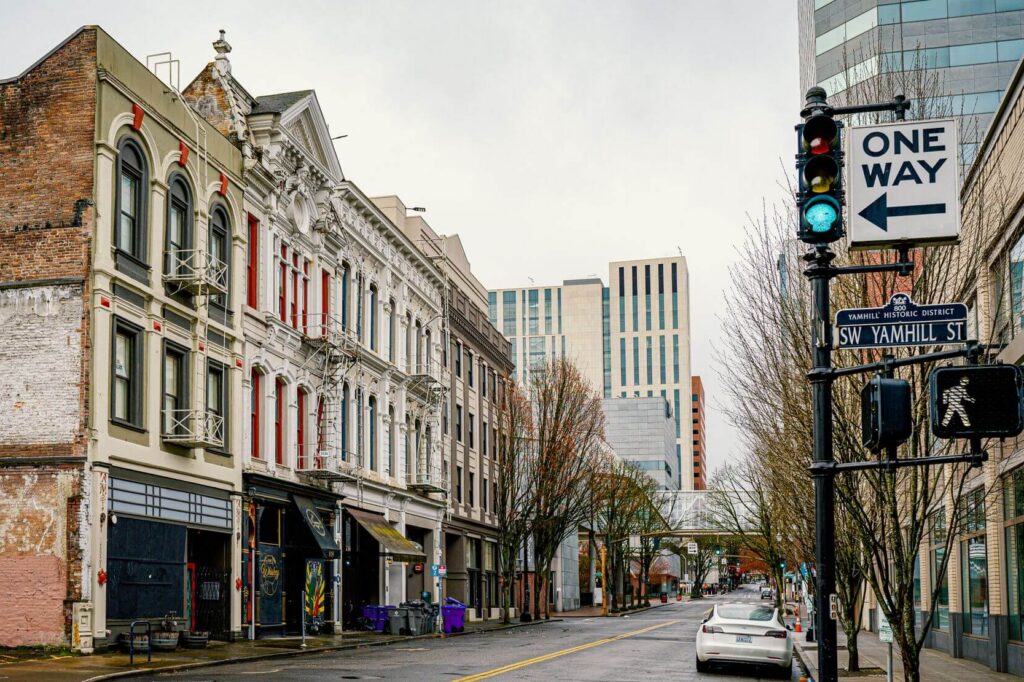
Common Causes of Pedestrian Accidents
Most collisions in Stumptown aren’t accidents in the true sense of the word. They are often the result of avoidable human error.
Speeding and Reckless Driving
Speed is the single greatest predictor of whether a pedestrian survives a crash. As vehicle speed increases, the driver’s field of vision narrows, and the distance required to stop grows exponentially. A pedestrian struck by a vehicle traveling at 20 mph has a 90% chance of survival; at 40 mph, that survival rate plummets to 20%.
Reckless driving, including weaving through traffic or beating a yellow light, remains a leading factor in pedestrian accidents.
Drunk and Intoxicated Driving
Despite strict Oregon laws and public safety campaigns, DUII (driving under the influence of intoxicants) continues to plague our roads. Alcohol and drugs (including legal marijuana) impair a driver’s reaction time, depth perception, and judgment. Intoxicated drivers often fail to see pedestrians in marked crosswalks or drift onto shoulders.
When a driver chooses to get behind the wheel while impaired, they are not just being negligent. These drivers are being profoundly dangerous to every motorist, pedestrian, and cyclist in their path.
Distracted Driving
The rise of smartphone use has led to a distraction epidemic on Portland streets. Whether it’s a driver checking a navigation app, texting, or adjusting the radio, taking eyes off the road for even two seconds can be fatal.
Distracted drivers often experience “inattentional blindness” or “perceptual blindness,” where they look toward a pedestrian but fail to mentally process their presence. This is a common cause of accidents at busy intersections where drivers are multitasking instead of monitoring the crosswalk.
Brake/Vehicle Problems
While driver behavior is the primary cause, mechanical failure also plays a role. Worn brake pads, bald tires that lose traction on wet pavement, or malfunctioning headlights can turn a near-miss into a tragedy.
When a vehicle is not properly maintained, the owner or the fleet manager may be held liable. Investigating these mechanical failures requires a law firm with the resources to examine maintenance logs and consult with accident reconstruction experts.
Poor Road Design or Road Conditions
Sometimes, the road itself is the enemy. The Portland Bureau of Transportation (PBOT) data highlights that many pedestrian accidents in Portland occur on High Crash Corridors. These are often roads with long distances between safe crossings, poor lighting, or confusing signage.
When a city fails to maintain clear sightlines or provides inadequate signal timing for elderly pedestrians to cross, the environment becomes a catalyst for injury. Navigating comparative fault in these cases is complex and requires experienced legal counsel.
Risk Factors That Increase the Likelihood of Pedestrian Accidents
Data from Portland’s Vision Zero initiative indicates that certain factors significantly increase the danger for local pedestrians.
Wide and Busy Multi-Lane Roads
Portland’s roads put many pedestrians and cyclists in danger. These high-speed, multi-lane arterial roads create a multiple-threat scenario: one driver might stop for a pedestrian, but the driver in the adjacent lane fails to see that pedestrian and passes at full speed.
Roads are designed mainly for vehicle throughput, often at the direct expense of pedestrian and cyclist safety.
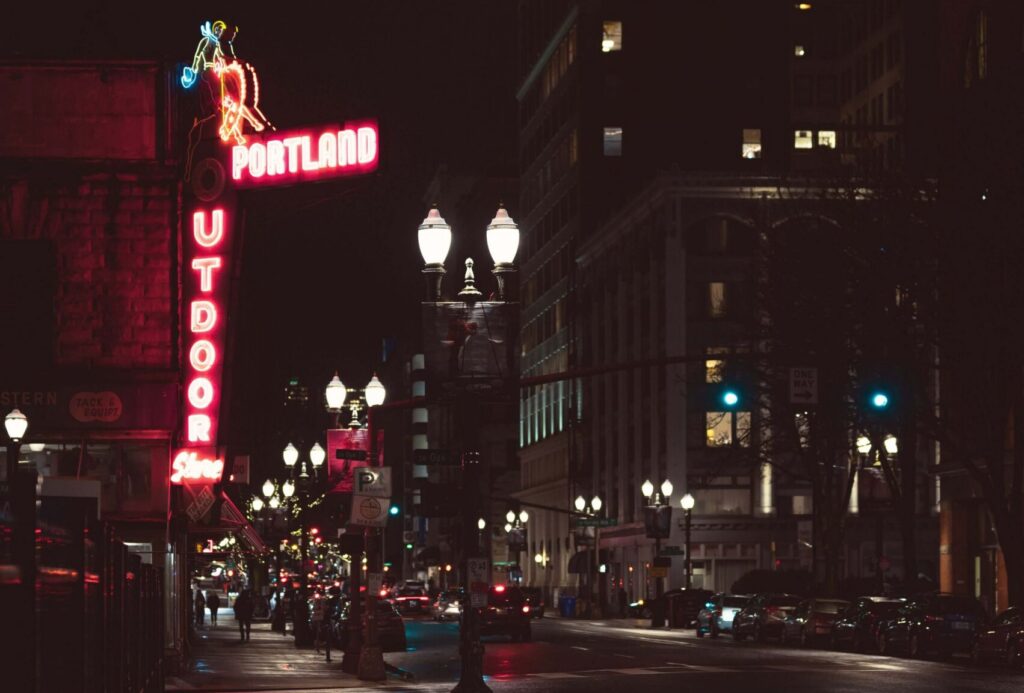
Night and Low-Light Settings
Visibility is a critical safety component for drivers and pedestrians.National data from the CDC shows that most pedestrian fatalities occur at night. In Portland, early winter sunsets and frequent overcast skies mean many commuters are walking in low-light conditions. Drivers often fail to slow down to match their reduced visibility, leading to catastrophic collisions in the dark.
Size of Vehicles
The trend toward larger SUVs and heavy trucks has made Portland streets deadlier. Larger vehicles have higher hoods and larger blind spots, making it difficult for drivers to see children or shorter adults near the front of the car.
Additionally, because of their weight and height, SUVs are more likely to strike a pedestrian in the chest or head rather than the legs, causing more serious internal injuries.
Rain, Fog, and Bad Weather
Portland is known for its rain, but precipitation creates a perfect storm for accidents. Rain reduces visibility through windshields and increases braking distances on slick asphalt. Fog can mask pedestrians until it is too late to react.
Drivers have a legal duty to adjust their speed to the conditions, yet many continue to drive the posted limit even when the weather demands caution.
Dangerous Portland Intersections Pedestrians Should Note
Certain areas in Portland demand extreme vigilance for motorists and pedestrians alike. Some of the most hazardous intersections in Portland include:
- SE Powell Blvd & SE 26th Ave
- NE 82nd Ave & NE Glisan St
- SE Division St & SE 122nd Ave
- W Burnside St & NW 2nd Ave
- SW 4th Ave & SW Market St
These intersections often combine high traffic volume with complex turning patterns, making them hotspots for pedestrian accidents.
Our Helpful Resources on Local Pedestrian Accidents
We encourage you to read our more detailed exploration of the most dangerous roads and intersections in Portland and our look at jaywalking and pedestrian laws in Oregon. We also encourage you to look at the Oregon Pedestrian Law Guide 2.0, which was authored by attorney Rob Kline.
Speak with a Proven Pedestrian Accident Attorney Today
When a pedestrian is hit, insurance companies often default to a blame-the-victim strategy. They may argue you were jaywalking or that you stepped into the street too quickly for the driver to react. This is why immediate action and professional investigation are vital.
You deserve a firm that understands the nuances of Oregon accident laws and has the trial experience to take on major insurance carriers. Attorney Rob Kline is here to help. Don’t let the insurance company dictate your recovery. For a free consultation, contact our Portland law office today.